What Is Margin in Trading? A Complete Beginner Explanation
Margin trading is one of the most powerful tools in financial markets, but also one of the most misunderstood. If you’ve ever asked what is margin in trading, the simple answer is this: it’s borrowed money from your broker that allows you to open larger positions than your account balance.
Used correctly, margin can enhance returns. Used carelessly, it can quickly lead to significant losses.
👉 https://h2tfunding.com/what-is-margin-in-trading/
1. What Is Margin in Trading?
Margin is the amount of money you must deposit to open a leveraged trade. It acts as collateral, allowing your broker to lend you additional funds.
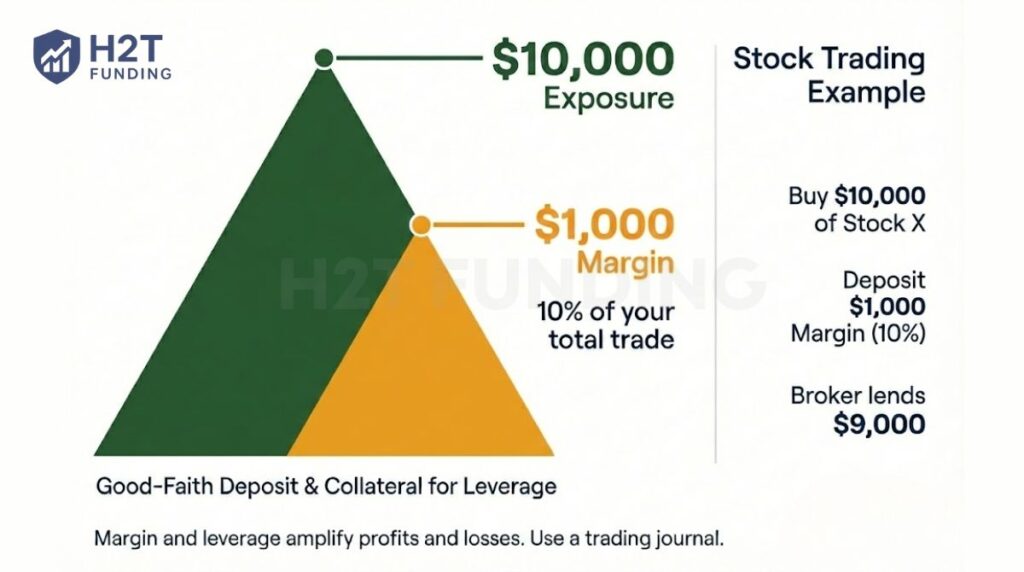 |
| What is margin in trading, in simple terms? |
For example, if you want to control a $10,000 position with a 10% margin requirement, you only need $1,000. The broker provides the remaining $9,000.
2. How Margin Trading Works
Margin trading begins with opening a margin account. Once funded, your deposit becomes the base for leveraged trades.
When you open a position:
- A portion of your funds is locked as margin
- The broker lends the rest
- Your profit or loss is based on the full position size
This means even small market movements can have a large impact on your account.
3. Margin vs Leverage: Key Difference
Understanding what is margin in trading requires knowing how it differs from leverage.
- Margin = your deposit (percentage)
- Leverage = multiplier (ratio)
For example, 2% margin equals 50:1 leverage. Margin is the cost of entry, while leverage determines your exposure.
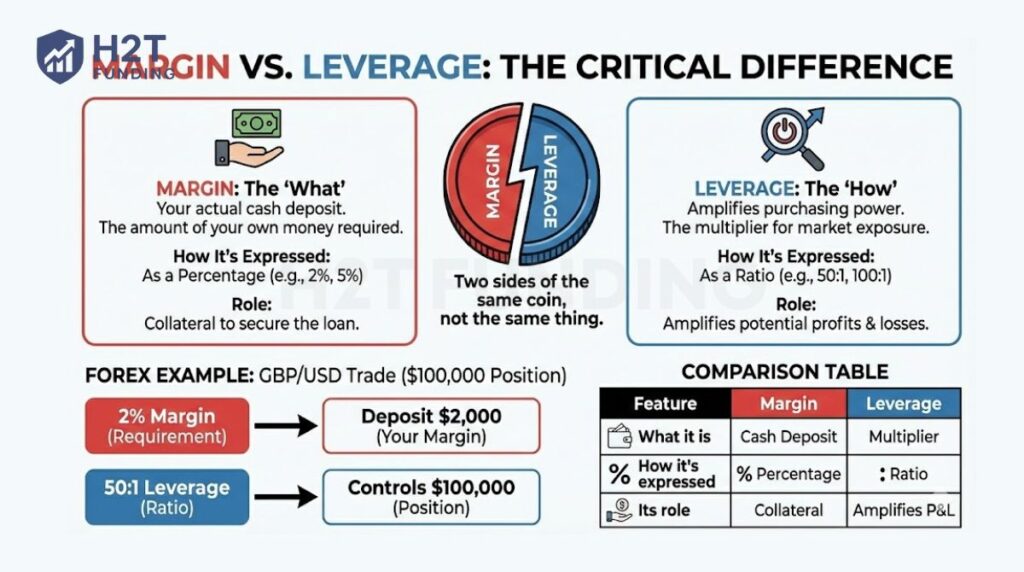 |
| The critical difference between Margin and Leverage |
4. Important Margin Terms You Should Know
To trade effectively, you need to understand key concepts:
- Margin account: allows borrowing from the broker
- Used margin: funds locked in open trades
- Free margin: available funds for new trades
- Equity: real-time account value
- Margin level: risk indicator of your account
These metrics determine whether your account is safe or at risk.
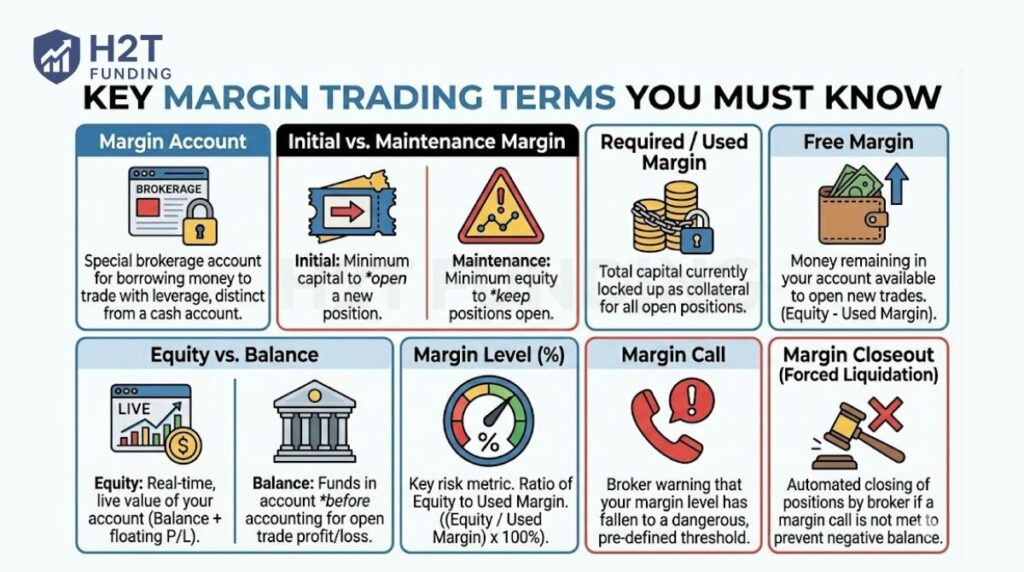 |
| Key margin trading terms you must know |
5. What Is a Margin Call?
A margin call happens when your account equity falls below the required level.
At this point, you must:
- Add funds, or
- Close positions
If you don’t act, your broker may automatically close your trades to prevent further losses.
6. Pros and Cons of Margin Trading
Margin trading offers clear advantages:
- Increased buying power
- Higher profit potential
- Ability to short markets
But it also carries serious risks:
- Amplified losses
- Interest costs
- Risk of forced liquidation
7. Final Thoughts
Understanding what is margin in trading is essential before using leverage in real markets. Margin is not inherently dangerous, it becomes risky when used without discipline.
If you want to succeed, focus on risk management, position sizing, and maintaining a healthy margin level.
#funding
#h2tfunding
#nganpham
#finance
#whatismarginintrading
#nganphamh2t


Nhận xét
Đăng nhận xét