What Is Leverage in Futures Trading? A Practical Guide for Beginners
Leverage is one of the most powerful tools in financial markets. If you’re asking what leverage in futures trading is, the answer lies in how traders control large positions using a small amount of capital—while managing significant risk.
👉 Read full source: https://h2tfunding.com/what-is-leverage-in-futures-trading/
1. What Is Leverage in Futures Trading?
Leverage in futures trading allows traders to control a large contract value by depositing only a small portion called margin.
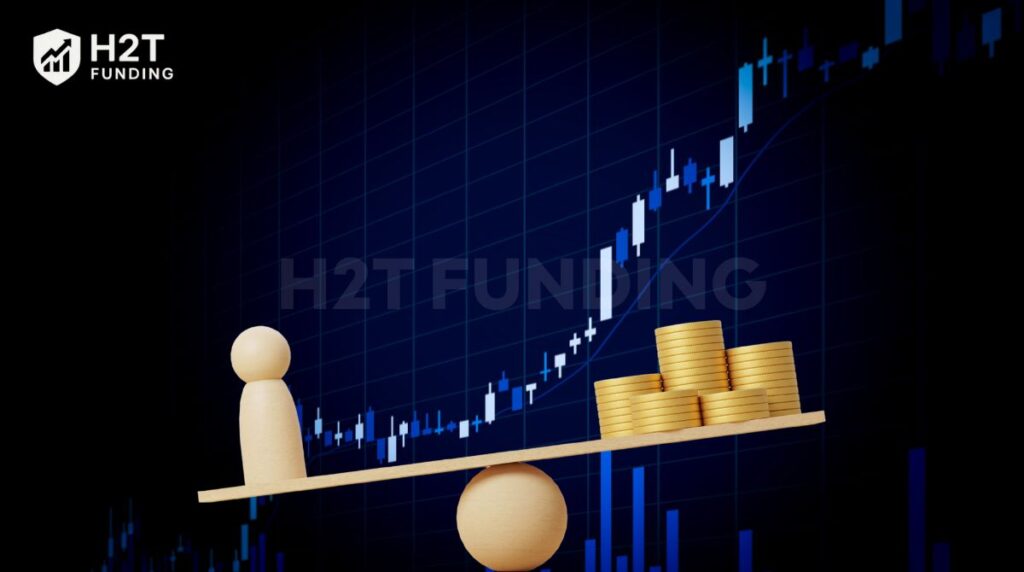 |
| Leverage in futures trading is using borrowed money to control a contract larger than your account balance |
For example, using $5,000 to control a $100,000 contract means you are trading with 20x leverage. This amplifies both profits and losses.
2. How Leverage Works in Futures Markets
Leverage operates through a margin system:
- Initial margin: Required to open a trade
- Maintenance margin: Minimum balance to keep it open
If your account falls below this level, you may face a margin call or forced liquidation.
3. Key Components of Futures Leverage
3.1. Margin Requirements
Margin acts as a security deposit that ensures you can handle price fluctuations.
3.2. Notional Value
This represents the full value of the contract you control, not just your deposit.
3.3. Broker Oversight
Brokers monitor your account and enforce rules to manage risk and prevent large losses.
4. How to Calculate Leverage
The formula is simple:
Leverage = Notional Value ÷ Account Equity
Example:
$100,000 contract ÷ $5,000 margin = 20x leverage
This means a 1% market move results in a 20% change in your account.
5. Benefits of Using Leverage
Leverage offers several advantages:
- Access to larger positions with less capital
- Greater capital efficiency
- Ability to diversify trades
- Potential for higher returns
Used correctly, it enhances trading flexibility.
 |
| Leverage enhances capital efficiency |
6. Risks of Leverage in Futures Trading
However, leverage comes with serious risks:
- Rapid losses during volatile moves
- Margin calls and liquidation
- Emotional stress from large swings
- Overtrading due to increased buying power
Even small price changes can significantly impact your account.
7. Leverage Across Different Markets
Leverage levels vary by market:
- Stocks: 2x–4x
- Futures: 10x–50x
- Forex: up to 100x
- Crypto: up to 125x
Higher leverage means higher risk and less room for error.
8. Leverage in Prop Firm Trading
In prop firms, leverage is combined with strict risk rules:
- Daily loss limits
- Maximum drawdown
- Controlled position sizing
This structure ensures traders cannot misuse leverage irresponsibly.
9. Common Mistakes Traders Make
- Using excessive leverage
- Ignoring stop-loss orders
- Trading emotionally
- Misunderstanding margin calls
Avoiding these mistakes is critical for long-term survival.
10. How to Use Leverage Safely
- Risk only 1–2% per trade
- Always set stop-loss orders
- Avoid maximum leverage
- Maintain sufficient margin
- Stay disciplined and patient
Leverage should be treated as a tool, not a shortcut.
11. Conclusion
Understanding what leverage in futures trading is helps you trade smarter, not riskier. While leverage can increase profits, it also magnifies losses.
Successful traders don’t chase high leverage, they control it. With the right strategy and discipline, leverage becomes a powerful ally rather than a dangerous risk.
#funding
#h2tfunding
#nganpham
#finance
#whatleverageinfuturestrading
#nganphamh2t


Nhận xét
Đăng nhận xét