What is slippage in trading and how to reduce it
Many traders understand entries and exits, but still struggle with execution quality. One key reason is slippage. Knowing what is slippage in trading is helps you protect your strategy from hidden risks that quietly affect performance, especially in Forex markets where speed and liquidity constantly change.
1. What is slippage in trading, and why does it matters
Slippage in trading is the difference between the price you intend to trade at and the price your order is actually filled at. This gap usually appears because markets move faster than orders can be executed.
Even small slippage can matter. Over dozens or hundreds of trades, these tiny price differences can reduce profitability and distort risk calculations.
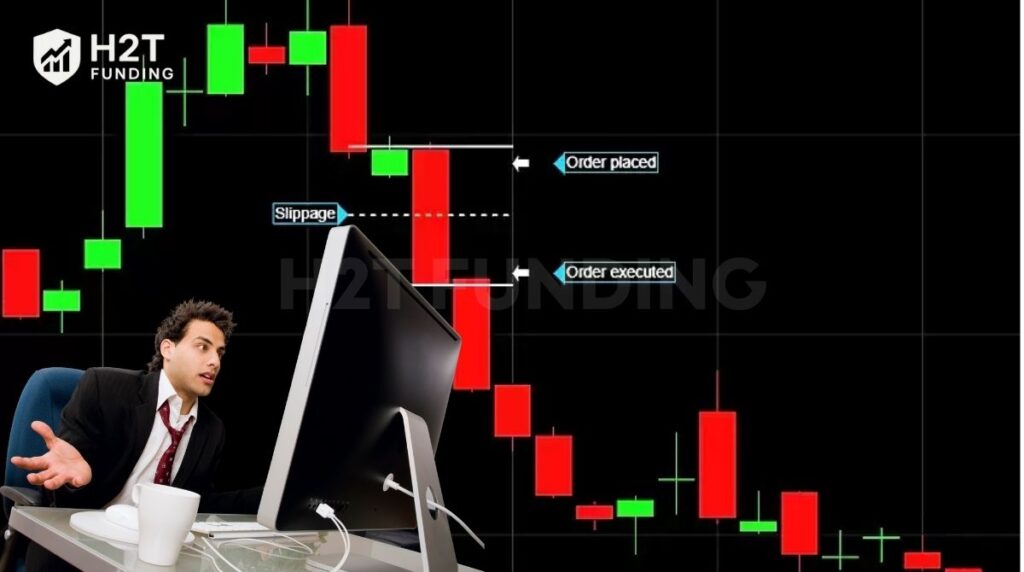 |
| Slippage in trading simply means the gap between the price you expect and the price your order actually gets filled at |
2. Common situations where slippage occurs
Slippage tends to appear during specific market conditions. High-impact news events, such as central bank announcements, often cause sharp price jumps that increase execution risk.
Low-liquidity periods are another common trigger. When fewer traders are active, orders may be filled at the next available price instead of the one you selected.
3. Slippage in Forex trading explained simply
In Forex, slippage is closely tied to liquidity and volatility. Major pairs usually experience less slippage, but it still happens during sudden price movements.
Understanding what is slippage in trading is helps traders avoid entering positions at unstable moments and improves execution discipline.
4. How slippage affects risk management
Slippage can cause stop-loss orders to trigger at worse levels than expected. This means traders may lose more than planned on a single trade.
If slippage is not accounted for, risk-reward ratios become inaccurate. Over time, this inconsistency can lead to emotional decision-making and loss of confidence.
5. Practical ways to reduce slippage
While slippage cannot be fully eliminated, traders can reduce its impact by using limit orders, trading during high-liquidity sessions, and avoiding major news releases.
Choosing a broker with fast execution and stable spreads also plays a critical role in managing what is called slippage in trading.
6. Why professional traders accept slippage
Experienced traders treat slippage as part of normal market behavior. Instead of chasing perfect entries, they focus on consistency, position sizing, and long-term performance.
By tracking execution quality and adjusting strategies, professionals maintain control even when slippage occurs.
Conclusion
Understanding what is slippage is in trading allows traders to manage expectations and improve overall execution quality. Slippage is not a flaw in trading; it is a reality of live markets.
With the right tools, timing, and risk management approach, traders can limit their impact and trade with greater confidence.
Learn more at: https://h2tfunding.com/what-is-slippage-in-trading/
#funding #h2tfunding #nganpham #finance #whatislippageintrading #nganphamh2t


Nhận xét
Đăng nhận xét