Raw spreads vs no commission: How to choose the right pricing model for your trading style
Raw spreads vs no commission: how to choose the right pricing model for your trading style
Trading fees are often underestimated, yet they directly affect long-term performance. When comparing raw spreads vs no commission, many traders focus only on spreads or commissions separately and miss the bigger picture. This article explains how both pricing models work in practice and helps you choose the option that best fits your strategy and risk approach.
1. What raw spreads really mean in real trading
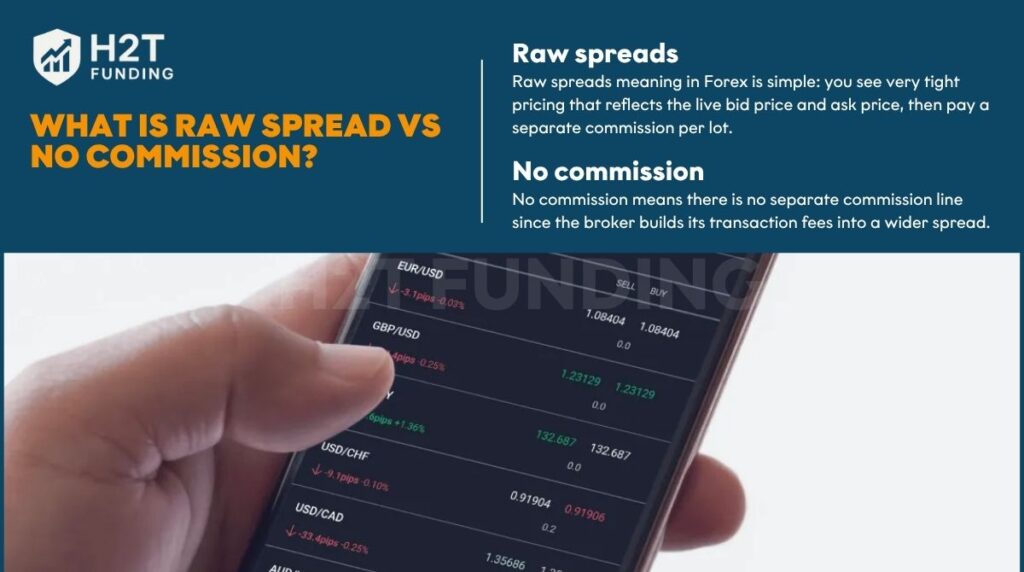
A raw spread account gives traders access to prices that closely reflect the underlying market. The bid and ask are usually very tight, sometimes near zero on major pairs.
 |
| The definition of raw spread and no commission |
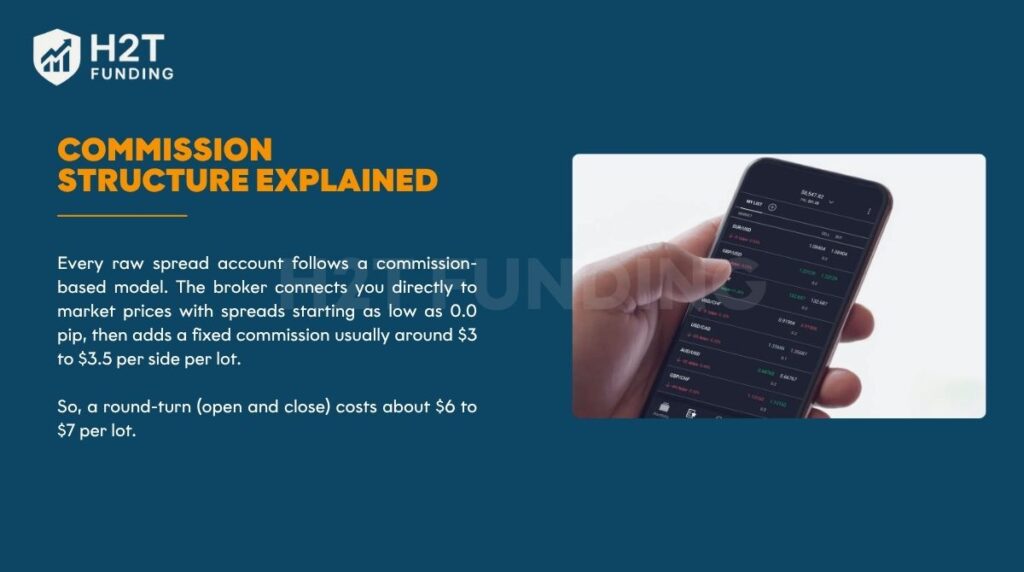
Instead of embedding costs in the spread, brokers charge a fixed commission per lot. This structure allows traders to see exactly how much they are paying for execution, making cost tracking more accurate.
Raw spreads are especially useful for traders who rely on precise entries and exits, where even small differences in pricing matter.
2. How no-commission pricing works behind the scenes
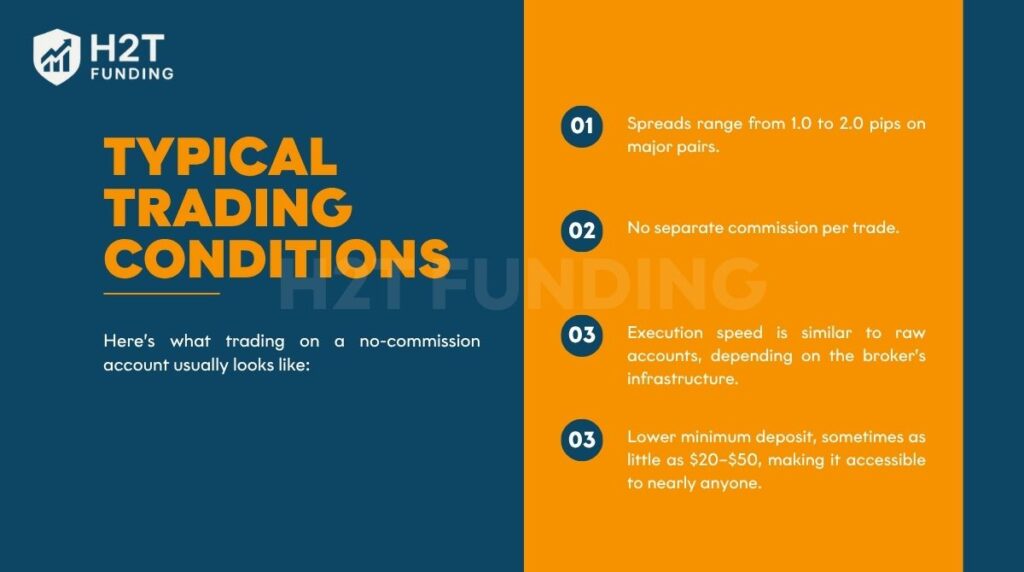
In a no-commission account, trading costs are built directly into the spread. The broker widens the bid–ask difference and removes the separate commission charge.
 |
| Commission structure explained |
This model simplifies the trading experience. Traders only need to look at the spread to understand their cost, without calculating commissions or pip values.
While the spread is wider, the overall cost can still be reasonable for traders who trade infrequently or hold positions longer.
3. Comparing total cost per trade
When evaluating raw spreads vs no commission, the most important factor is total cost per trade, not just the headline spread.
A raw spread account may show a near-zero spread but include a commission equivalent to a fraction of a pip. A no-commission account may show a wider spread but no additional fees.
For active traders, the raw model often results in lower cumulative costs. For low-frequency traders, the difference may be minimal.
4. Execution quality and its impact on costs
Tight pricing only helps if execution quality is reliable. Slippage, latency, and spread widening during volatile periods can reduce the advantage of raw spreads.
No-commission accounts may appear more stable because spreads are already wider, but execution quality still depends on broker infrastructure.
Regardless of the pricing model, consistent execution is essential for maintaining strategy performance.
5. Matching pricing models to trading styles
Different trading styles benefit from different cost structures.
Scalpers and day traders typically prefer raw spreads due to tighter pricing and clearer cost control. Algorithmic traders also benefit from raw pricing when spreads remain stable.
 |
| Typical trading conditions |
Swing traders and position traders often choose no-commission accounts because trading frequency is lower and simplicity outweighs minor cost differences.
Choosing the right model means aligning pricing with how often you trade and how sensitive your strategy is to spread changes.
6. Cost transparency and risk management
Raw spread accounts offer higher transparency, making it easier to calculate risk-to-reward ratios and manage stop-loss placement accurately.
No-commission accounts reduce complexity but make it harder to separate broker costs from market movement. This can slightly affect precision in tight risk setups.
Traders who actively manage risk often prefer models that make costs visible and measurable.
7. Which option is better in the long run
There is no universal winner in the raw spreads vs no commission debate. Each model serves a different type of trader.
Raw spreads generally benefit traders who trade frequently and focus on efficiency. No-commission accounts suit traders who value simplicity and consistency over micro-optimisation.
The best choice is the one that supports disciplined execution and realistic risk control over time.
Conclusion
Choosing between raw spreads vs no commission is about understanding how you trade, not just which option looks cheaper. Raw spreads reward precision and activity, while no-commission accounts offer simplicity and predictable costs.
🔗 Full guide:
https://h2tfunding.com/raw-spreads-vs-no-commission/
#funding
#h2tfunding
#nganpham
#finance
#rawspreadsvsnocommission
#nganphamh2t


Nhận xét
Đăng nhận xét