What is a good Sharpe ratio for evaluating smart returns
Investors often look at performance charts and focus on returns, but without context, those numbers tell only half the story. Understanding what a good Sharpe ratio is helps you measure whether the reward you receive is worth the risk you're taking. This metric is essential for comparing strategies, evaluating fund managers, and building long-term, stable investment portfolios.
1. Why the Sharpe ratio is important in risk-adjusted analysis
The Sharpe ratio reveals how much excess return an investment generates for each unit of volatility. This means it filters out the noise of unpredictable price swings and highlights the true quality of a strategy.
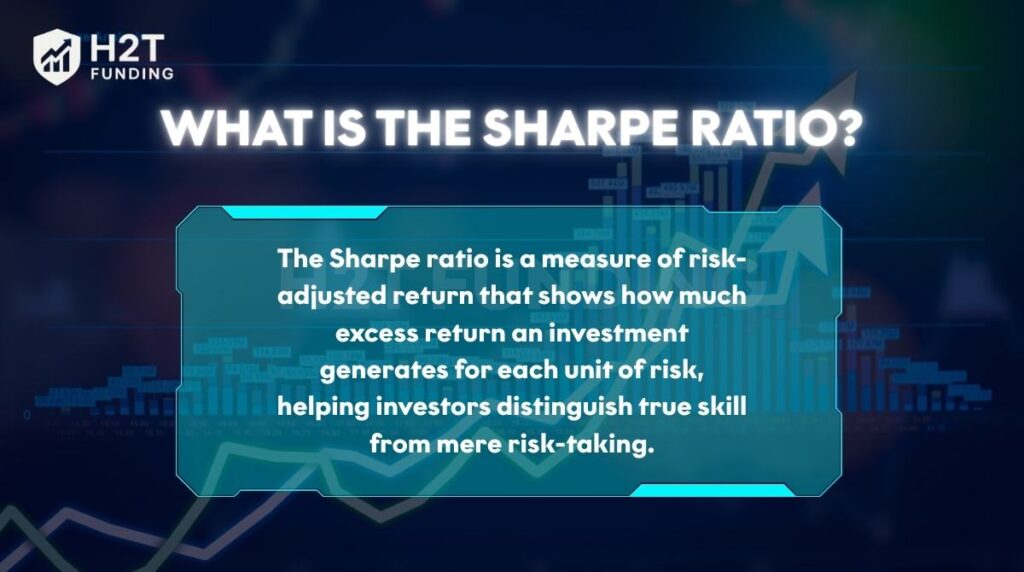
A high return with wild fluctuations may look impressive, but the Sharpe ratio exposes whether that performance came from skill or unnecessary risk.
2. How to interpret what a good Sharpe ratio is
A Sharpe ratio above 1.0 is generally acceptable, signaling that returns are reasonably efficient. Ratios above 2.0 are considered very good, while anything above 3.0 reflects exceptional skill or strong risk controls.
However, context matters. What counts as “good” differs across asset classes, time horizons and volatility profiles.
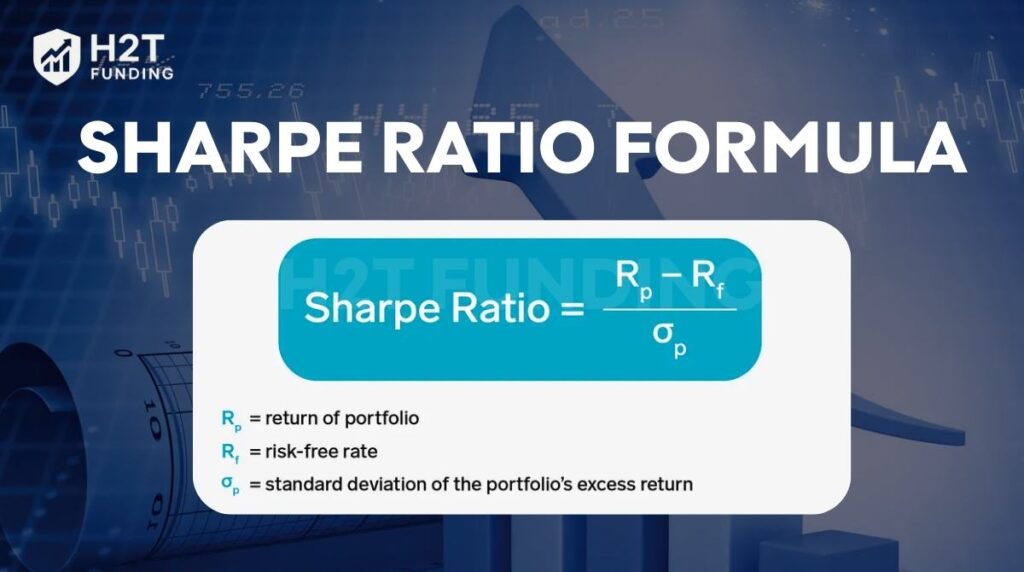 |
| Sharpe Ratio Formula |
Learn more: https://h2tfunding.com/what-is-a-good-sharpe-ratio/
3. Sharpe ratio expectations across different investment types
Different markets carry different levels of volatility, which affects how investors evaluate performance:
-
Equities: Long-term Sharpe ratios typically range from 0.5–0.7.
-
Bonds: Conservative asset classes often deliver lower ratios of 0.2–0.4.
-
Hedge funds: Skilled managers aim for ratios above 1.0, with 2.0+ considered excellent.
-
Cryptocurrency trading: High volatility can inflate Sharpe ratios, but sustainability must be scrutinized.
-
Prop trading: Top proprietary traders often target Sharpe ratios above 2.0.
4. When a high Sharpe ratio becomes a red flag
Extreme Sharpe ratios may signal over-optimization, excessive leverage, or data manipulation. A ratio that seems too good to be true often requires deeper investigation, especially if it comes from short testing periods or unusually smooth returns.
Healthy, sustainable performance produces strong, but not unrealistic, Sharpe values.
5. How the Sharpe ratio compares to other performance metrics
While powerful, the Sharpe ratio is not perfect. It penalizes both upside and downside volatility equally, which may misrepresent strategies that experience rapid growth.
Complementary metrics such as the Sortino ratio and Calmar ratio provide additional insights into downside risk and drawdown recovery, making them valuable partners in a complete analysis toolkit.
Conclusion
Understanding what is a good Sharpe ratio is helps investors shift from chasing high returns to seeking reliable, risk-adjusted performance. By comparing investments on a level playing field, you can make smarter decisions, avoid unnecessary risk, and build strategies that stand the test of time. Whether you're analyzing stocks, crypt,o or professional trading systems, the Sharpe ratio remains one of the most trusted indicators of true investment quality.
#funding #h2tfunding #nganpham #finance #whatisagoodsharperatio #nganphamh2t


Nhận xét
Đăng nhận xét