How to manage Topstep’s trailing drawdown and avoid violations in 2025
Many traders entering Topstep’s Trading Combine or funded programs struggle with one recurring challenge: the trailing drawdown. While the rule is designed to protect capital, misunderstanding how it functions often leads to account breaches. This article explains how the trailing drawdown works in 2025 and offers practical strategies to stay compliant while growing your account.
1. How Topstep calculates the trailing drawdown
Topstep uses a trailing drawdown as a dynamic maximum loss limit. It moves only when your account reaches a new high, and once adjusted upward, it never moves down.
This mechanism safeguards accumulated profit while ensuring traders maintain disciplined risk practices.
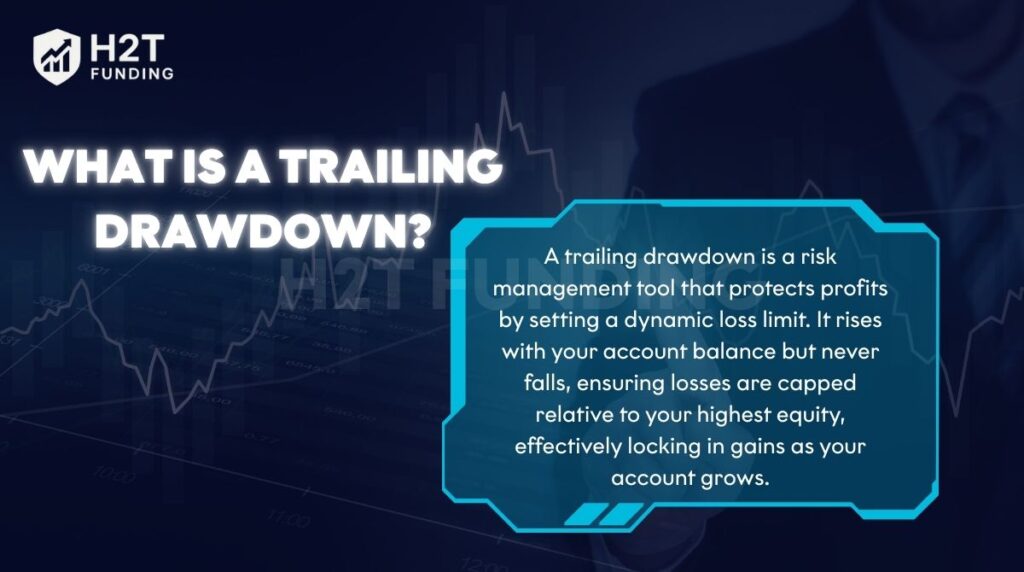 |
| What is a trailing drawdown |
2. Difference between EOD and intraday drawdown rules
Topstep applies the drawdown differently depending on your account stage:
-
Trading Combine: The trailing drawdown is based on end-of-day (EOD) realized profit only. Unrealized swings during the day do not affect the threshold.
-
Funded accounts: The drawdown can trail intraday highs, including unrealized gains, making risk management more sensitive.
Recognizing this distinction is key to preventing unnecessary violations.
3. Why locking in profits matters
Since the trailing drawdown increases only with realized gains, booking profits regularly is essential. Holding open winners without closing them may look good intraday, but it does nothing to raise your safety buffer.
A disciplined approach to securing profits can increase your margin for market fluctuations and reduce emotional pressure.
4. Common mistakes that lead to violations
Even skilled traders breach the drawdown due to:
 |
| What happens if you violate the maximum loss limit |
-
Using oversized positions during volatile sessions
-
Ignoring EOD balance tracking
-
Letting unrealized profits reverse before closing
-
Trading aggressively after losses
-
Misjudging how close they are to the trailing limit
Avoiding these habits significantly increases your odds of passing the Combine and maintaining funding.
5. Best practices to manage trailing drawdown in 2025
To stay within Topstep’s rules and build consistent performance:
-
Keep position sizes proportional to your account
-
Use predefined stop losses on every trade
-
Monitor your EOD balance and drawdown limit daily
-
Pause trading when you’re close to the threshold
-
Adjust strategy during high-volatility periods
-
Use a trading journal to track risk behavior
These actions help build strong habits and reduce the chance of accidental breaches.
6. Should traders prefer static or trailing drawdown firms?
Some prop firms use static drawdown limits, which do not adjust upward. Static drawdowns offer simpler rules but provide less protection for accumulated profits.
Trailing drawdowns, like Topstep’s, reward consistency by expanding risk room over time.
Choosing the right structure depends on your trading style and tolerance for rules.
7. Conclusion
The trailing drawdown is not meant to trap traders—it’s designed to encourage discipline and protect capital. By understanding how it moves and applying smart risk management, traders can navigate Topstep’s evaluation and funded stages with confidence.
For deeper examples and full breakdowns, visit:
➡️ https://h2tfunding.com/does-topstep-have-trailing-drawdown/
#funding #h2tfunding #nganpham #finance #doestopstephavetrailingdrawdown #nganphamh2t


Nhận xét
Đăng nhận xét