Trailing stop loss vs trailing stop limit: A trader’s guide to smarter exits
In trading, success isn’t just about finding good entries — it’s about managing exits effectively. Two advanced tools that help traders protect profits and limit losses are trailing stop loss and trailing stop limit. Both adjust dynamically with market movement, but they serve different purposes. Understanding their strengths and weaknesses can help you make more confident trading decisions.
1. What is a trailing stop loss?
A trailing stop loss is designed for simplicity and flexibility. As the market moves in your favor, your stop price moves too, maintaining a pre-set distance from the current price. When the price reverses and touches this stop, your trade is closed with a market order.
The primary benefit is certainty: you’re guaranteed an exit, though it may come with slippage in fast-moving conditions. This makes it an excellent choice for traders who prioritize ease of use and want their trades managed automatically.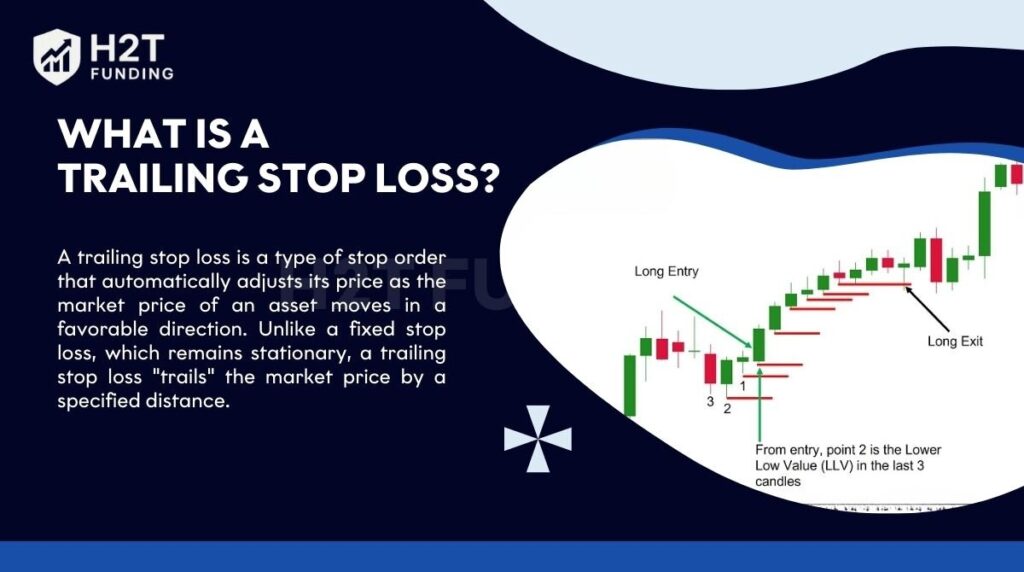
2. What is a trailing stop limit?
A trailing stop limit adds precision to your exit strategy. Like a trailing stop loss, it follows the market price, but when triggered, it places a limit order instead of a market order. This gives you more control over your final execution price, which is critical for traders who want to avoid poor fills.
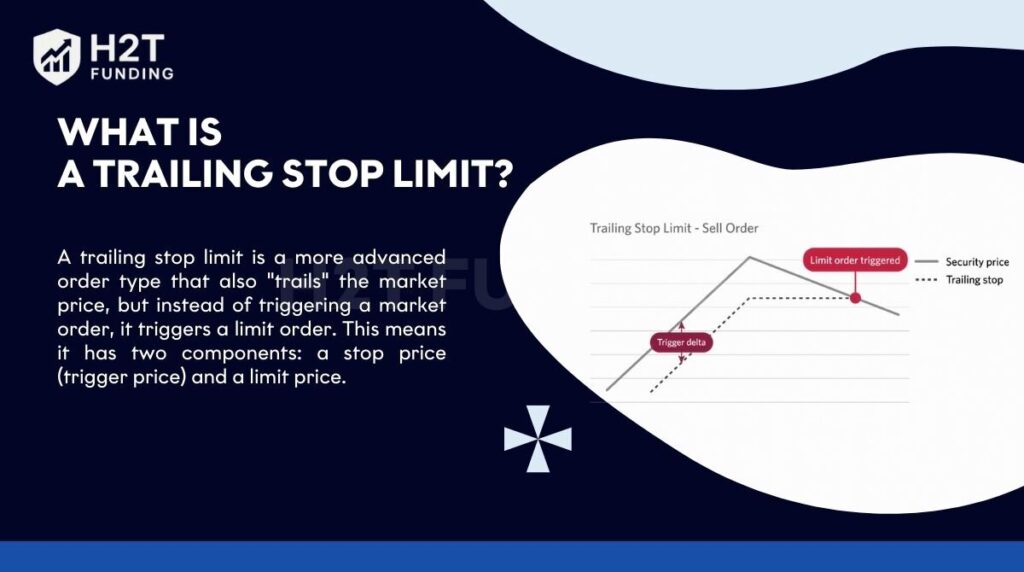 |
| A trailing stop limit trails the price but triggers a limit order instead of a market order |
However, this control comes at a cost. If the market gaps or moves past your limit price, the order may not be filled, leaving your position exposed.
3. Choosing between the two
When deciding between a trailing stop loss and a trailing stop limit, consider your priorities.
If you need a guaranteed exit and prefer simplicity, a trailing stop loss is the safer option.
If precision matters more than certainty, a trailing stop limit gives you the control you need.
Both tools require practice to master, and testing them in different market conditions can help refine your strategy.
4. Practical scenarios
-
Trending markets: Trailing stop loss is highly effective in strong trends, allowing you to capture gains while reducing risk.
-
High-volatility trading: Trailing stop limit works best when price swings are sharp, and slippage could be costly.
-
Swing and position trades: Trailing stop loss helps secure profits over longer timeframes.
-
Scalping or short-term trading: Trailing stop limit offers tighter price control, essential for small profit margins.
5. Key mistakes to avoid
Many traders fail to adjust their stops to match volatility. A stop set too close can result in unnecessary exits, while one set too far may not provide meaningful protection. Additionally, traders often misunderstand execution mechanics, leading to frustration when orders don’t fill as expected.
6. Final thoughts
Both trailing stop loss and trailing stop limit can transform your risk management strategy. The best choice depends on your style, the market’s behavior, and your comfort level with execution risks.
Discover more advanced risk management tools and trading strategies here:
🔗 https://h2tfunding.com/trailing-stop-loss-versus-trailing-stop-limit/
#funding #h2tfunding #nganpham #finance #trailingstoplossvstrailingstoplimit #nganphamh2t


Nhận xét
Đăng nhận xét