What are the 4 trading sessions and how they shape your Forex strategy
The Forex market operates 24 hours a day, five days a week—but that doesn’t mean it's active all the time. Traders who succeed understand that this nonstop environment is driven by four distinct trading sessions. Knowing what are the 4 trading sessions helps you tap into the right moments for liquidity, volatility, and opportunity.
Let’s break down how each session works and how you can use this timing to sharpen your trading edge.
 |
| The Forex market stands out because it operates 24 hours a day, five days a week |
1. Sydney session: The calm start to the trading week
The Sydney session marks the official open of the Forex market each week, starting late Sunday in the U.S. It’s generally the quietest session, offering low liquidity and limited volatility. While major breakouts are rare, it’s an ideal time for long-term traders to prepare their positions or analyze market sentiment for the week ahead. Currency pairs involving the Australian and New Zealand dollars—like AUD/USD and NZD/USD—are most active during this time.
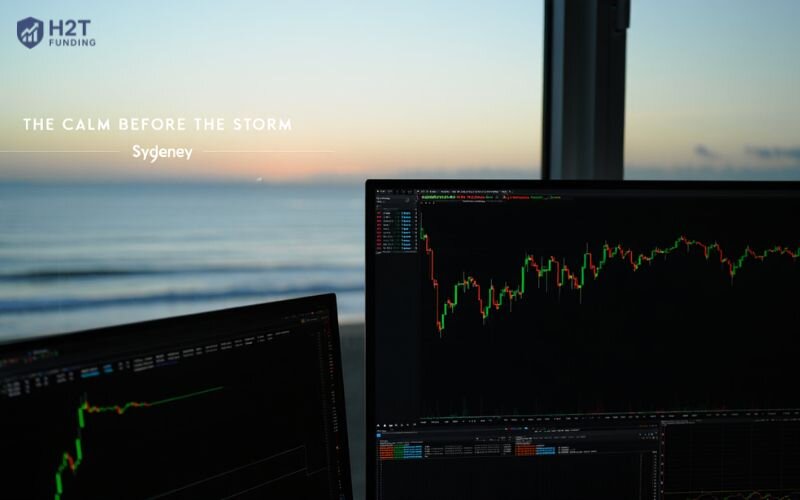 |
| Think of the Sydney session as the calm before the storm |
2. Tokyo session: A range trader’s playground
As the Asian markets come online, the Tokyo session picks up the pace. It overlaps with Sydney for a few hours, but it’s generally more liquid. Although not as volatile as London or New York, the Tokyo session often sees currency pairs like USD/JPY, EUR/JPY, and AUD/JPY come alive. Many traders use range-based strategies during this time, capitalizing on relatively predictable price channels.
 |
| The Tokyo session takes over as the main financial hub in Asia |
3. London session: Where the market gets aggressive
The London session is the most liquid and volatile of all. Nearly all major banks and institutions are active, and it overlaps with both the Tokyo and New York sessions. This creates the ideal environment for fast price movements and strong trends. Pairs like GBP/USD, EUR/USD, and USD/CHF tend to experience sharp movements. This session is a favorite among day traders and scalpers—just make sure your risk management is tight.
 |
| The London session is the largest and most liquid Forex market in the world |
4. New York session: The powerhouse of trends
The final session of the day, the New York session, opens with high impact, especially during its overlap with London (8 AM to 12 PM ET). This overlap creates some of the most active trading hours, particularly for USD pairs like EUR/USD, GBP/USD, and USD/JPY. Traders using trend-following strategies often find the New York session rich with opportunities. It’s also the session when major U.S. economic news is released, often triggering significant market moves.
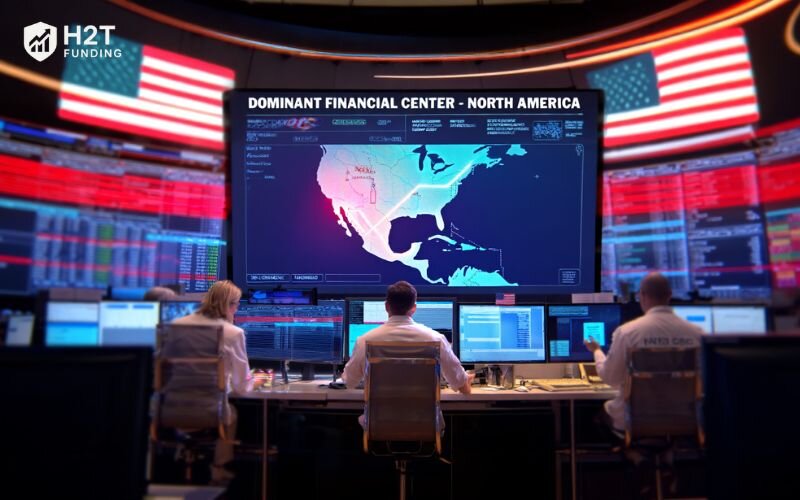 |
| The New York session is the home session for US traders and the dominant financial center for North America |
5. Timing your strategy with session overlaps
The most active periods in Forex trading are when two sessions overlap. The London-New York overlap is the most important, offering peak liquidity and volatility. On the other hand, the Tokyo-London and Sydney-Tokyo overlaps provide moderate action, mostly in JPY and AUD pairs. Recognizing these windows allows you to adjust position sizing, stop-loss levels, and overall strategy with precision.
6. Final thoughts
So, what are the 4 trading sessions? They’re more than just time blocks—they represent different market personalities. The calm of Sydney, the predictability of Tokyo, the aggression of London, and the momentum of New York give you a framework to time your trades wisely. Align your strategy with the right session and watch your trading performance shift from random to intentional.
🔗 For the full breakdown and strategic insights, read the complete guide here:
https://h2tfunding.com/what-are-the-4-trading-sessions/
#funding #h2tfunding #nganpham #finance #whatarethe4tradingsessions #nganphamh2t


Nhận xét
Đăng nhận xét