How do funded trading accounts work? A beginner’s guide
For traders with skill but limited capital, a funded trading account can be a gateway to bigger opportunities. Instead of risking personal savings, you trade with a firm’s money, keep a share of the profits, and focus on performance. This guide explains what these accounts are, how they operate, and how you can start.
1. What is a funded trading account?
A funded trading account is an arrangement where a proprietary trading firm supplies the capital you use in the market. In exchange, you split the profits you make. The firm absorbs most of the risk—within agreed drawdown limits—while you gain access to more buying power than you could finance personally.
 |
| What is a funded trading account |
2. How do funded trading accounts work?
You earn money by meeting the firm’s performance targets and receiving a percentage of your net profits. To qualify, traders typically go through an evaluation phase:
-
Step 1: Apply and choose a program – Pick a prop firm whose rules, instruments, and profit-sharing terms match your style.
 |
| There are many funded programs to start with |
-
Step 2: Pass the evaluation – Trade on a simulated account to hit profit goals while respecting drawdown and consistency rules.
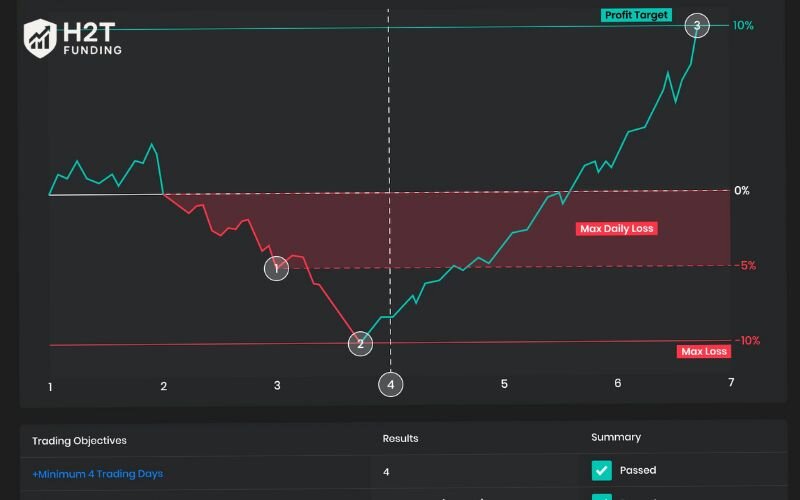 |
| The evaluation phase |
-
Step 3: Get funded – Once you pass, you trade with the firm’s capital and can request payouts.
-
Step 4: Maintain funded status – Continue trading profitably while following the same risk management requirements.
 |
| Maintaining funded status |
3. Funded vs. regulated trading accounts
4. How to get a funded trading account
-
Select a reputable firm
-
Learn their rules
-
Complete the evaluation phase
-
Verify your identity
-
Start trading with their capital
5. Pros and cons of funded accounts
Advantages
-
Trade with large capital without risking personal savings
-
Built-in risk management rules
-
Access to training and support
Drawbacks
-
Strict rules that can end your account quickly if broken
-
Evaluation challenges can be stressful and time-consuming
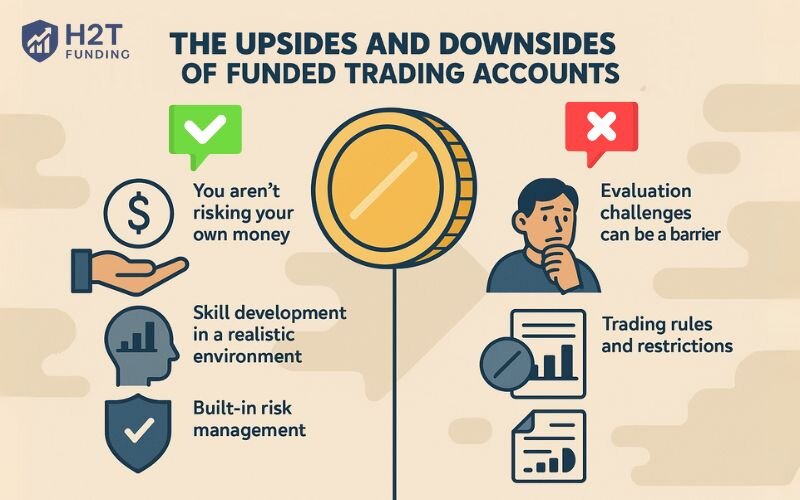 |
| Drawbacks of funded trading accounts |
6. Choosing the right program
Consider your trading style, time availability, preferred instruments, and whether you thrive under strict or flexible rules. Trial programs can be useful before committing to a full evaluation.
7. How payouts work
After trading profitably, complete the firm’s verification process, request your payout, and receive your share—typically within a few business days.
Conclusion
Funded trading accounts aren’t about chasing one lucky trade—they’re about consistent execution under strict risk controls. If you can demonstrate discipline and skill, the capital will follow. For more details, read the full guide here: https://h2tfunding.com/how-do-funded-trading-accounts-work/
#funding #h2tfunding #nganpham #finance #howdofundedtradingaccountswork #nganphamh2t


Nhận xét
Đăng nhận xét