What is drawdown in trading? A trader’s real-world risk compass
Let’s face it: most traders love to showcase their wins. A green streak on the chart feels great — but it’s far from the full picture. If you’re aiming for long-term profitability, you need to shift focus from your wins to how you handle your losses. That’s where drawdown comes in — arguably the most important concept in any trader’s risk management arsenal.
In this guide, you’ll learn what drawdown in trading means, how it affects your performance, and how to control it before it controls your account.
What exactly is drawdown in trading?
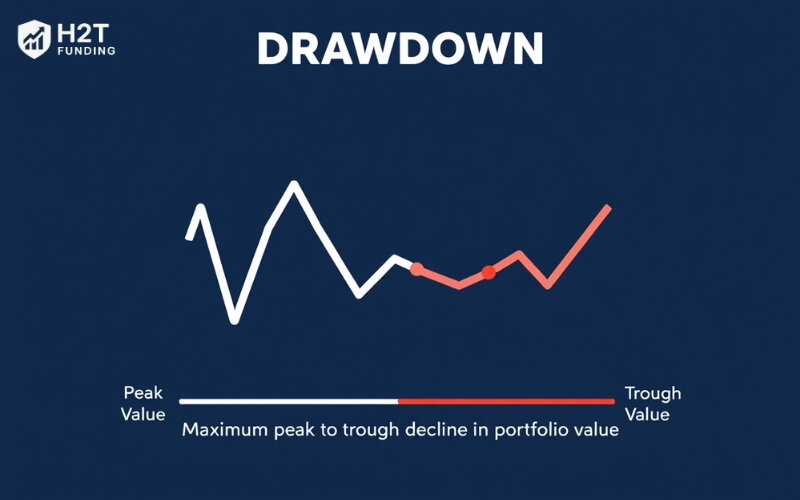
At its core, drawdown refers to the percentage drop in your trading account from a peak to a trough — that is, the highest point your equity reached before it fell to a low point.
Imagine hiking up a mountain. The summit represents your highest account equity, while the descent into a valley mirrors your drawdown. The steeper and deeper the valley, the more risk your strategy has taken on.
This principle applies to all financial markets — whether you’re trading forex, futures, or stocks — and gives you a clear sense of your strategy's volatility over time.
Why drawdown is more important than your win rate
A high win rate might look impressive on paper, but it tells you nothing about the risk taken to achieve those wins. In contrast, drawdown shows how much pain — financial and emotional — your system can cause before bouncing back.
Here’s why every serious trader tracks drawdown:
1. It reveals how mentally prepared you are
Losses are inevitable. But if you know your system’s historical drawdown is, say, 12%, you’re less likely to panic during a slump. Without that benchmark, even a 5% drop can send you into a spiral of doubt and revenge trading.
2. It reflects the true nature of your strategy
A flashy system with 90% wins might also carry 25% drawdowns. That’s a red flag. In contrast, a steady strategy with consistent, smaller drawdowns offers long-term sustainability — even if the returns aren’t jaw-dropping.
3. It builds trust with capital providers
When applying to prop firms or managing outside capital, your drawdown statistics matter far more than your P&L chart. Firms want traders who can protect capital, not just grow it. A low, controlled drawdown shows you respect risk — and that’s the real key to unlocking funding.
The 3 types of drawdown every trader should know
Not all drawdowns are created equal. To properly analyze risk, you need to recognize the nuances.
🔹 Maximum Drawdown (MDD)
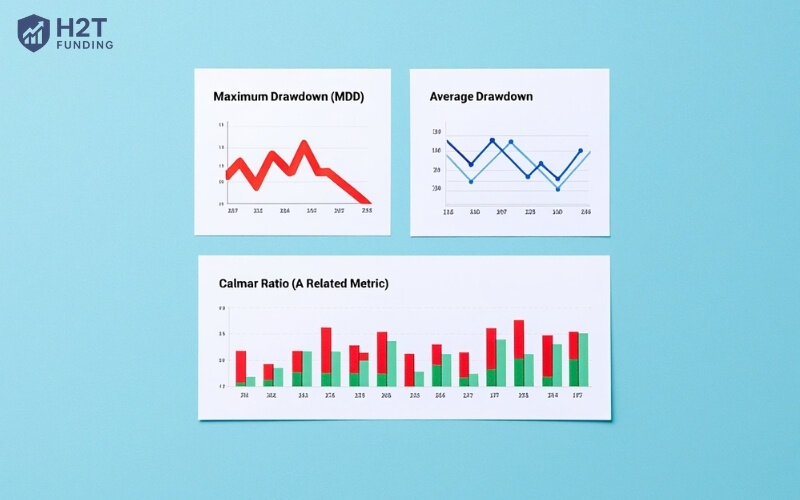
This is the largest drop in equity from peak to trough — the worst-case scenario. It tells you how deep your losses have gone in the past and what kind of capital cushion you’ll need to survive.
🔹 Average Drawdown
While MDD looks at the worst-case dip, average drawdown shows the typical decline during normal trading cycles. It’s a more day-to-day view of your strategy’s stress level.
🔹 Calmar Ratio
Though not a drawdown itself, this performance ratio compares your annual return to your maximum drawdown. A higher Calmar Ratio means you’re getting more return per unit of risk — a big green flag for investors.
Hidden dangers of drawdowns beyond the numbers
Drawdown isn’t just about losing money — it affects your time, psychology, and decision-making.
Time lost in recovery: A 20% drawdown requires a 25% gain just to break even. That’s time your capital isn’t compounding.
Emotional fatigue: Extended drawdowns lead to poor choices like overtrading or abandoning strategies too early.
Strategy flaws: High or frequent drawdowns may signal deeper issues with risk-reward balance, stop-loss placement, or market conditions.
Drawdown vs. Loss: Know the difference
It’s easy to confuse a drawdown with a loss — but they’re not the same.
A loss is a single event: one trade closed in the red.
A drawdown is the cumulative decline across multiple trades, often before any recovery happens.
Understanding this distinction is crucial for accurate backtesting and psychological resilience.
How to calculate drawdown in trading (with example)
The standard formula for drawdown is:
Drawdown (%) = ((Peak Equity - Trough Equity) / Peak Equity) * 100Example:
Peak equity = $27,000
Trough equity = $25,000
Drawdown = (($27,000 - $25,000) / $27,000) * 100 = 7.41%
Knowing how to calculate drawdown helps you benchmark your system and adjust sizing or stop-losses accordingly.
Prop firms & drawdown: Why they care so much
If you plan to get funded, you must fully understand the drawdown rules set by prop firms.
Maximum Drawdown: This is a hard limit — go below it, and your account is shut down.
Daily Loss Limit: Designed to prevent traders from blowing up accounts in one emotional trading day.
Equity vs. Balance drawdown: Some firms measure drawdown based on open trade equity, not just closed balance. That means your unrealized losses can trigger a violation — even if you’re planning to recover.
👉 Learn how prop firms like Apex, FTMO, or FundedNext measure drawdown before applying.
How to survive and manage a drawdown like a pro
Here are practical steps to manage — not just survive — drawdowns:
Use stop-losses religiously
Stick to the 1–2% risk per trade rule
Reduce lot size during losing streaks
Backtest your strategy to understand its MDD
Step away from the charts when emotional
Never revenge trade — it only worsens the damage
Drawdowns are inevitable. But how you respond determines whether you stay in the game.
Final thoughts: Master risk first, profit second
Drawdown is more than a performance stat — it’s a mirror reflecting your discipline, patience, and process.
The most consistent traders aren’t chasing flashy gains. They’re protecting their capital, understanding drawdowns, and adapting accordingly.
If you’re serious about becoming a professional trader or passing a prop firm evaluation, drawdown management isn’t optional — it’s essential.
📚 Want to go deeper into trading psychology and risk control?
👉 Read the full article here:
🔗 https://h2tfunding.com/what-is-drawdown-in-trading/
#funding
#h2tfunding
#nganpham
#finance
#whatisdrawdownintrading
#nganphamh2t


Nhận xét
Đăng nhận xét