Money Masterclass for Young Adults: Your Essential Guide to Financial Success
Navigating the financial world as a young adult can feel overwhelming, especially with new responsibilities like paying rent, managing student loans, or starting a career. Mastering a few key financial skills can set you up for success, helping you avoid stress and build a secure future.
How to create and stick to a budget
A budget is a plan for your money. It shows what you earn and what you spend, so you can save for goals like a new phone or moving out.
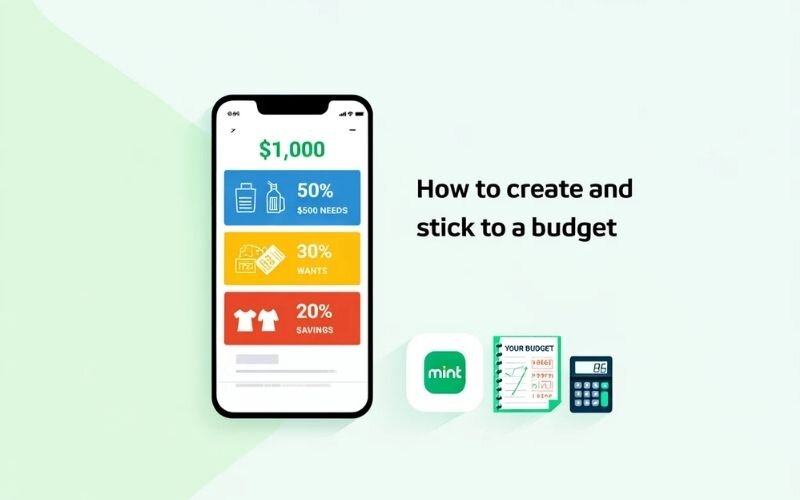
- Track your money: Write down your income (like your job or allowance) and expenses (like food or rent).
- Use the 50/30/20 rule: Spend 50% on needs (rent, groceries), 30% on wants (movies, clothes), and 20% on savings or debt. For example, if you earn $1,000 a month, that’s $500 for needs, $300 for wants, and $200 for savings.
- Focus on needs over wants: Needs are things you can’t live without, like food. Wants are extras, like eating out. Choosing groceries over takeout saves money.
The importance of saving early
Saving early helps you prepare for surprises and grow your money over time with compound interest, where your savings earn interest, and that interest grows too.
- Start an emergency fund: Save $500-$1,000 for unexpected costs, like car repairs. Keep it in a savings account you can access easily.
- Save a little each month: Even $20 a week adds up. Set up automatic transfers to a savings account to make it easy.
- Cut small expenses: Skip one coffee a week or cancel an unused app subscription to boost your savings.
For example, I saving $50 a month at age 20 with 5% interest could grow to over $40,000 by age 60.
Using credit responsibly
Credit lets you borrow money, like with a credit card, but you need to use it carefully to avoid debt and build a good credit score (a number showing how reliable you are with money).
- Understand credit: Credit cards let you spend now and pay later, but unpaid balances charge high interest (15-25%). A good credit score (670+) helps you get loans or apartments.
- Pay on time: Always pay your full credit card bill each month to avoid extra costs. For example, paying off a $100 grocery bill right away keeps you debt-free.
- Check your credit report: Look at your credit report once a year for free at AnnualCreditReport.com to spot mistakes or fraud.
Introduction to investing
Investing means using your money to buy things that grow in value, like stocks.
It’s a way to build wealth, even if you start small.
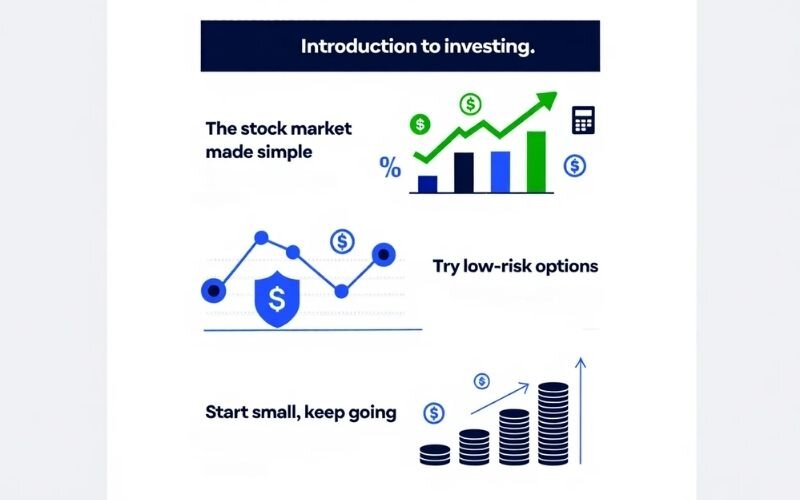
- The stock market made simple: Buying a stock means owning a tiny part of a company. If the company grows, your money does too.
- Try low-risk options: Index funds or ETFs spread your money across many companies, reducing risk. They’re great for beginners.
- Start small, keep going: Invest $20 a month in an index fund through platforms like Fidelity. With an 8% return, $20 monthly could grow to $30,000 in 30 years.


Nhận xét
Đăng nhận xét