How to not spend money: Your new plan when budgeting fails
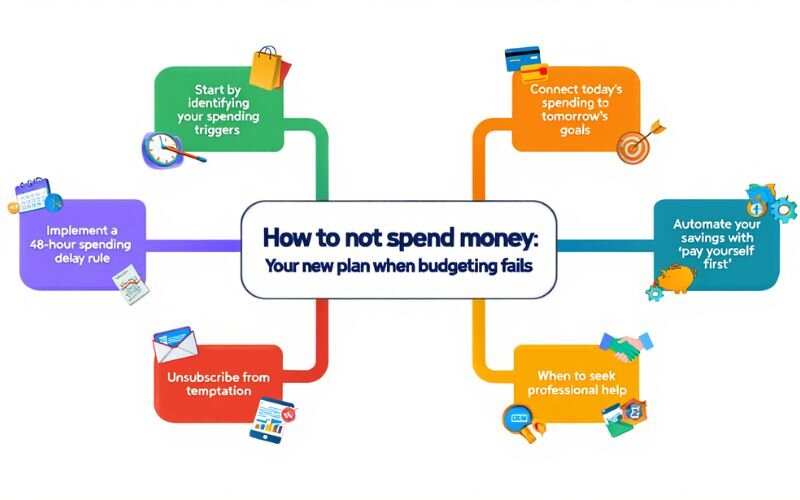
If traditional budgeting doesn’t work for you, it’s time to shift the focus from numbers to behavior. Instead of tracking every dollar, you’ll build habits that naturally reduce unnecessary spending and support long-term financial resilience. If you're wondering how to stop spending money on useless things, this approach focuses on the root causes, not just the symptoms, of overspending.
 |
| It’s time to shift the focus from numbers to behavior |
3.1. Start by identifying your spending triggers
Understanding what motivates your spending is necessary before you can manage it. Many purchases aren’t logical; they’re emotional or situational reactions made automatically.
Spending triggers are the emotions, situations, or habits that make you make impulsive purchases. The first step to control is to become conscious of them.
Common triggers include:
- Emotions: Shopping when you're stressed, bored, or seeking a reward.
- Situations: Visiting online stores while tired or hungry.
- Digital exposure: Instagram ads or TikTok hauls create FOMO (fear of missing out).
- Social pressure: Buying just to match what others are doing or wearing.
For the next seven days, become your own financial detective. Track not just what you spend, but the "why" behind it. Write down the moment, the mood, and the context.
Do you find yourself online shopping on a Friday night after a stressful week? Or do you tend to order takeout when you're feeling tired? Naming these patterns is the first step to replacing them with better choices, like taking a walk or journaling. The key is awareness, not restriction.
3.2. Connect today’s spending to tomorrow’s goals
A common cause of impulsive spending is the need for immediate satisfaction. To counter this, make your long-term goals emotionally visible and tangible.
Instead of vaguely “saving for travel,” visualize the trip: set your phone wallpaper to the Amalfi Coast or Kyoto in spring. When tempted by a non-essential purchase, ask: Is this worth delaying that experience?
This simple mental shift helps reframe daily decisions. You're not saying no to a $60 pair of shoes; you’re saying yes to the plane ticket that matters more.
3.3. Implement a 48-hour spending delay rule
Impulse purchases are often driven by emotion, not need. The 48-hour rule introduces a buffer between the urge to buy and the actual transaction.
For any non-essential item over a set threshold, such as $50, add it to your cart, but delay the purchase for 48 hours. This pause gives your rational mind time to assess whether the item aligns with your priorities or is simply a reaction to short-term desire.
In most cases, the sense of urgency fades, and the decision becomes clearer. This simple tactic reduces buyer’s remorse and supports more intentional spending.
See more: How to not spend money when budgeting doesn’t work
#funding
#h2tfunding
#nganpham
#finance
#howtonotspendmoney
#nganphamh2t


Nhận xét
Đăng nhận xét