Grid Trading Explained: A Non-Directional Strategy to Harness Volatility
Grid trading is a rule-based strategy designed to exploit market volatility by systematically placing buy and sell orders at set intervals. These orders form a “grid” above and below a base price, creating a framework that reacts to price movement instead of predicting it.
Unlike directional strategies that depend on forecasting where the market will go next, grid trading thrives in uncertainty. It enables traders to lock in profits whether the market moves up or down — as long as there’s movement, the system works.
Because of its non-directional nature, grid trading is particularly well-suited to sideways or ranging markets. Instead of relying on strong trends, it benefits from the natural back-and-forth of price action, collecting small but frequent profits over time. These micro-gains, when accumulated, can lead to substantial returns.
A key element of success in this strategy is choosing the right grid spacing — the distance between each order. Smaller intervals trigger trades more often and may capture more price action, but they also raise the chance of overtrading and increase commission costs. On the flip side, wider grid spacing reduces the number of trades but may miss out on shorter movements.
The challenge (and the art) of grid trading lies in balancing trade frequency with profitability. When sized appropriately, it becomes a powerful tool for navigating volatile markets — no crystal ball required.
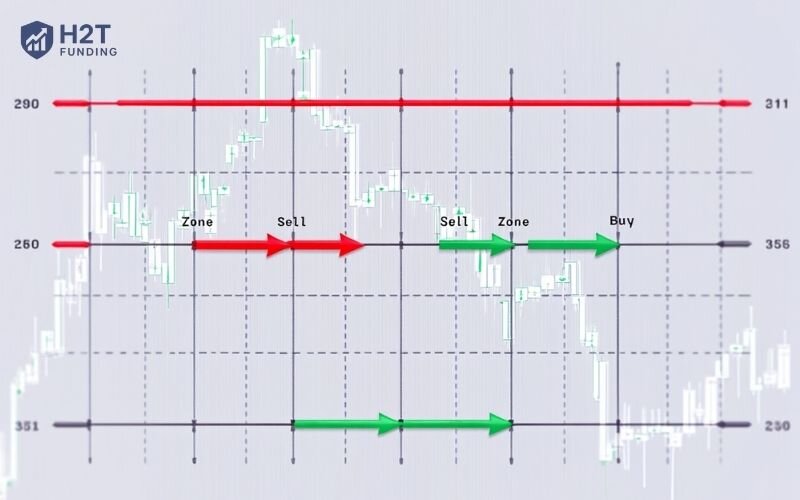 |
| Grid trading is a systematic trading strategy that capitalizes on market volatility |
Read more: https://h2tfunding.com/mastering-grid-trading/
#funding #h2tfunding #nganpham #finance #mastergridtrading #nganphamh2t


Nhận xét
Đăng nhận xét